
Mustard didn't just show up to accompany hot dogs at the St. Louis World's Fair in 1904, although that was when it really made a hit on the American Scene.  Actually, mustard, a zippy yellow sauce made from the ground seed of the mustard plant in combination with some liquid (water, wine, beer, etc.) along with seasonings and perhaps other flavorings is believed to be the oldest condiment known.
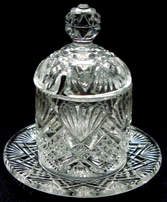
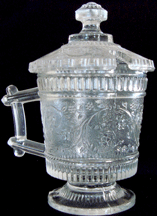
To purchase the mustard pots shown below, please click HERE


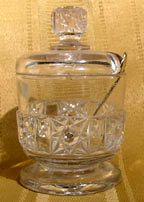
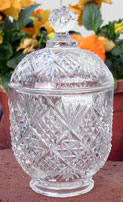
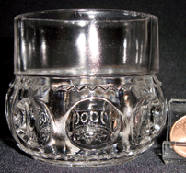
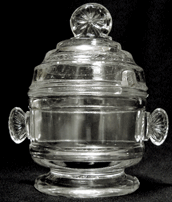
The Bellaire Goblet Co. made a cov'd mustard/ condiment jar in their STARS & BARS aka DAISY & CUBE aka Bellaire goblet #600 pattern ca 1886 $58


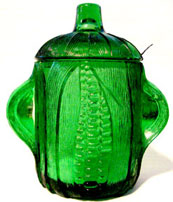
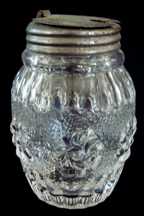
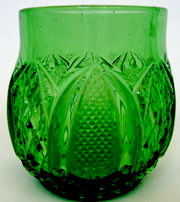
This little mustard container fashioned from a shaker is made of chocolate glass and is in the CACTUS aka GREENTOWN; INDIANA TUMBLER Greentown Glass #375
ca 1899.
**SOLD**

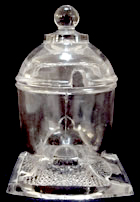
Another States' Series pattern for WISCONSIN by the U S Glass Co.
ca 1903.

$145

   No one knows who first used mustard to flavor food but it is believed to have originated in Ancient Egypt and exported to Europe by the Romans who used it for both food and medicine - as a cure for anything from hysteria to snakebite to bubonic plague.   

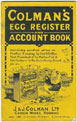
   In the early 19th century Colmans of Norwich, England became the world's first mustard millers - milling the heart of the mustard seed to a fine powder, mustard flour - and they established mustard as an industrial food ingredient.
   Alvina Breckel remembers that when she volunteered as a "pioneer woman" at the Chicago Historical Society, she learned that without refrigeration, meat preservation methods didn't produce such a tasty product. So heavy salting and condiments such as mustard were helpful in covering up the slightly/ strongly rancid taste of meat.

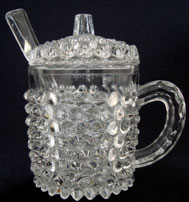
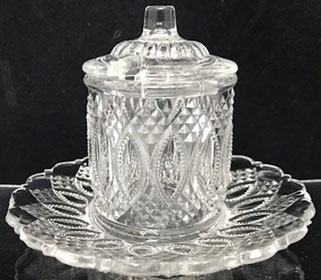
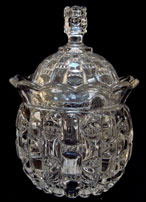
Ever ready to meet the container and serving needs of Victorian Americans, many of the companies that made pattern glass created small containers with slotted lids in order that these tasty condiments such as mustard and horseradish would be stylishly served.
We show a few examples here ranging in production from about the 1880s to the first decade of the 20th century.


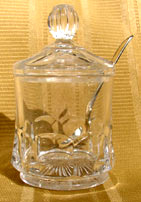
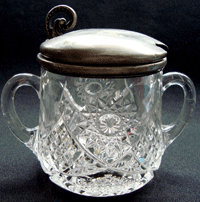
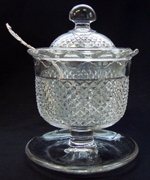
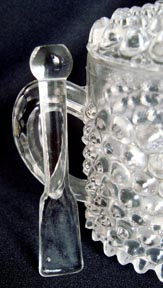
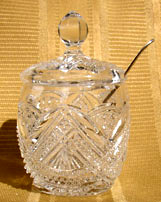
A cov'd mustard by J. B. Higbee in their COLONIAL pattern ca 1910. The base is signed with the HIG bee as is the very rare signed condiment spoon. 
All 3 pieces - $145


A scarce piece of the States' Series MINNESOTA pattern by the U S Glass Co. ca 1890s. It has 3 handles like the toothpick holder of the pattern. **SOLD**


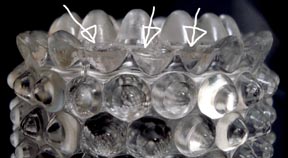
Heisey made this cov'd mustard in their FANCY LOOP w/ original lid aka #1205 pattern ca 1898. $115


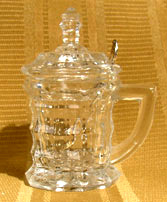
This little mug with a slotted lid (which makes it into a condiment jar) is shown in Adams' Mug book and named FLARED BOTTOM SQUARES.
$55


Duncan Miller made this cov'd mustard or horseradish container in their BLOCKED THUMBPRINT BAND pattern ca 1900. $58

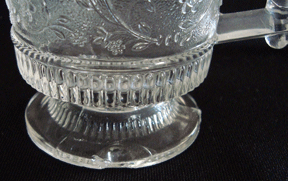
Model Flint Glass Co. of Albany made the Peerless pattern ca. 1896-1902.  This little pot has the slotted lid. $68


Another pattern from the John Higbee Glass Co. is the LACY DAISY cov'd condiment or mustard which was produced ca 1908. $55

    Beginning as early as the 1850s some flint patterns had as one of their forms, a set of castor bottles which included a mustard castor. According to Larry, the different castors were reportedly kept in the pantry and depending on the meal, different castors were set on the table in a metal holder. On the left is one such early pattern, DOUBLE WEDDING RING, probably from the 1860s - '70s and on the right is a vaseline or canary castor in the DAISY & BUTTON pattern probably from the 1880s. The makers of both these patterns are unknown to us.

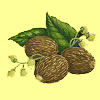
The Mustard plant is a very hardy annual, weed-like in it's ability to tolerate harsh conditions, it blooms bright yellow in the spring. By late summer the plants are heavy with green pods containing the mustard seeds which are as hardy as the plant and can survive decades of drought.
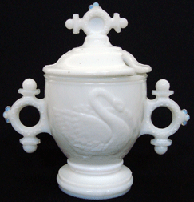
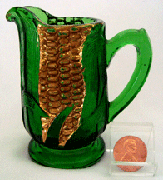
     According to Walt Adams, of the Pattern Glass Mugs book fame, around the turn of the 20th century, glass companies began making covered containers and other forms of glass which they & their distributors called "Packer's Goods". These came with matching glass lids, or metal or cardboard lids.     He assumes that the description would indicate that the company buying the glass vessel could fill it with anything of their choosing.  This is corroborated in Dr. Herrick's Greentown book refers to the Dolphin and states: "This was a mustard container, filled and handled by grocers."The containers ranged from milk glass cov'd novelties to childrens' mugs to EAPG patterned pots all of which could be used after the contents were consumed. A few of these are shown in the photo above and below.  On some you can see the top edge which once was fitted with a metal lid.
    The 3 condiment/mugs above are on Left: MULTIPLE SCROLLS by Canton Glass Co. c. 1893 $22; Center DRUM with some gold & an eagle by Westmoreland Specialty Co. $23 and Right is CHERRY WITH THUMBPRINT by Kokomo Jenkins #475 c 1904 "Sweetheart" on the side; top is rough.  $25.
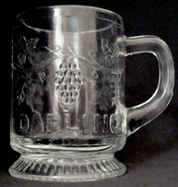
Above is one such popular child's mug which had the word "DARLING" pressed into the base of the mug bowl. The rim where the temporary disposable metal lid fit can be seen on this piece. It is LATE PANELLED GRAPE, pattern line #650 of the D. C. Jenkins Glass Co. of Kokomo and Arcadia, IN.  $35

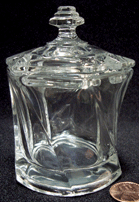
   Regardless of what use these handy little containers such as this pretty vaseline SWIRL pattern, were originally meant to fulfill, they can be used today for any number of other purposes such as artificial sweetner.
$65

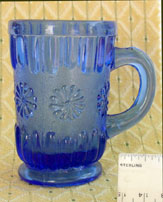
     Cobalt blue is a hard-to-find color in EAPG. This mug which probably originally was covered is a Bryce product and also pictured in Walt Adams' mug book #513.
$50
This is the base only to a
King's Crown pattern
mustard jar. If you have a
2 1/8" slotted lid, it will fit this.
We'll buy your patterned
lid or sell you the base for $65.
Florida is the State's
series pattern name for
this mustard jar also
missing its lid. The under-
plate is attached. $58

The mustard/mugs shown here with prices are for sale.
These prices do not include the cost of shipping & insurance.
To purchase
GO HERE.

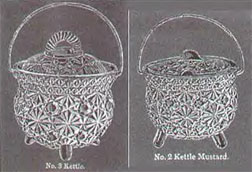
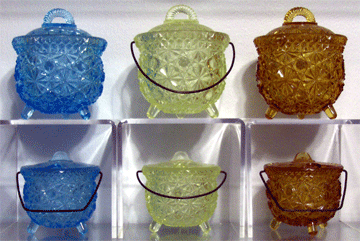
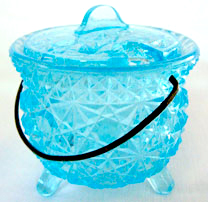
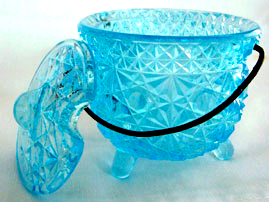
These drawings came from an original catalog reproduction, reproduced in Heacock's book, 1000 TOOTHPICK HOLDERS. The bigger one is No. 3 Kettle. The smaller is No. 2 Kettle Mustard. And here are the actual pots in blue, vaseline & amber, courtesy of Dave Peterson. All with original lids, all made by Adams & Co., 1880's, possibly into the time after US Glass Co. combine started. The lids are worth twice as much as the pots. Clear ones certainly exist but are not part of his collection.

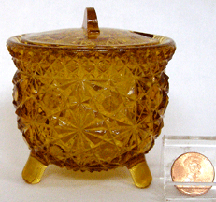
Here is one of the above novelty No. 2 Kettle Mustard Pots for sale.
It is missing the wire bale, is amber & has a spoon slot & a small shallow flake
under the lid where it doesn't show with the lid on. It is $65.